




Marble is often perceived as a material that must remain perfect to be valued. In reality, marble is defined not only by its initial appearance, but by how it evolves over time. Wear, patina, and subtle surface evolution are intrinsic to the material’s nature and contribute to its long-term character.
For marble in projects and long-term surface character, browse the marble collection and read What Is Marble: Properties and Uses.
Unlike synthetic surfaces, marble responds to daily use. Light foot traffic, contact, and environmental exposure gradually soften the surface, creating a lived-in character rather than visible damage. This process does not weaken the stone, but alters how it reflects light and how it is perceived within space.
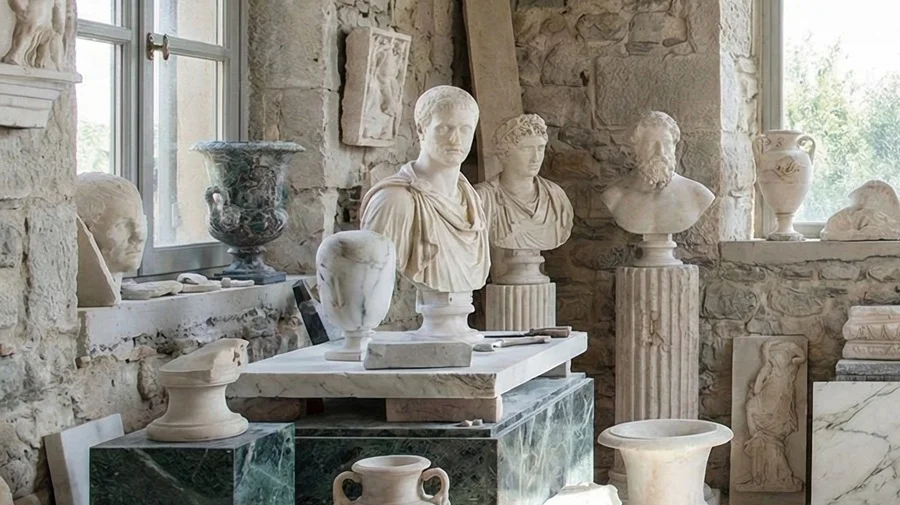
Patina is one of marble’s most misunderstood qualities. It is not a flaw, but a natural result of interaction between material and use. As the surface becomes smoother through time, veining may appear more integrated and tonal transitions more balanced. Many historic interiors are valued precisely because of this layered surface character.
Different finishes influence how marble ages. Polished surfaces show wear more clearly at first, but eventually settle into a softer reflection. Honed or matte finishes age more evenly, allowing change to blend into the overall surface rather than stand out. In both cases, ageing is gradual and visually coherent.
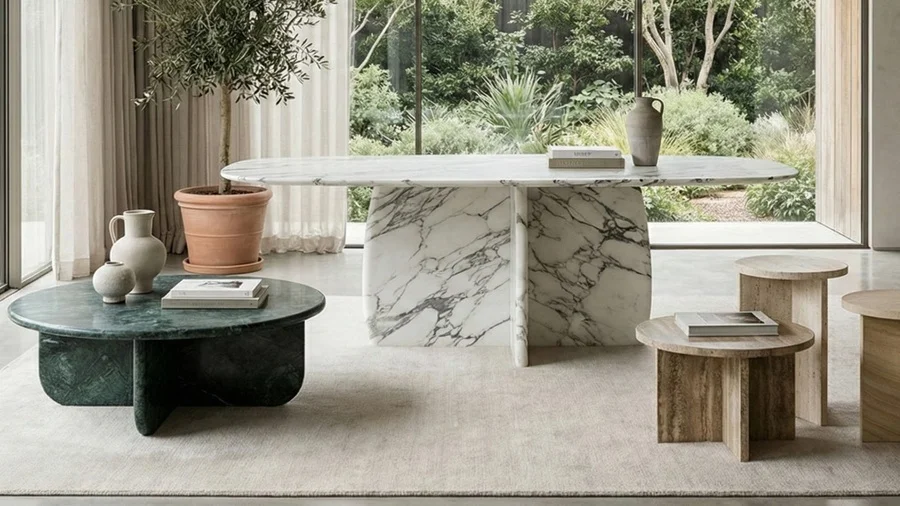
The way marble ages also depends on how it is used. Floors develop a different character than wall surfaces. Accent elements may show touch and interaction, while large slabs retain their original presence longer. These variations add depth rather than inconsistency to architectural spaces.
Understanding how marble changes over time is essential when selecting it as a material. Rather than resisting ageing, good design anticipates it. When chosen with intention, marble does not lose value through use. It gains identity, depth, and a sense of permanence in space that few materials can offer.
Marble ages not by fading away, but by becoming part of the space it inhabits. Its long-term appeal lies in this quiet transformation, where time enhances rather than diminishes its presence.


