



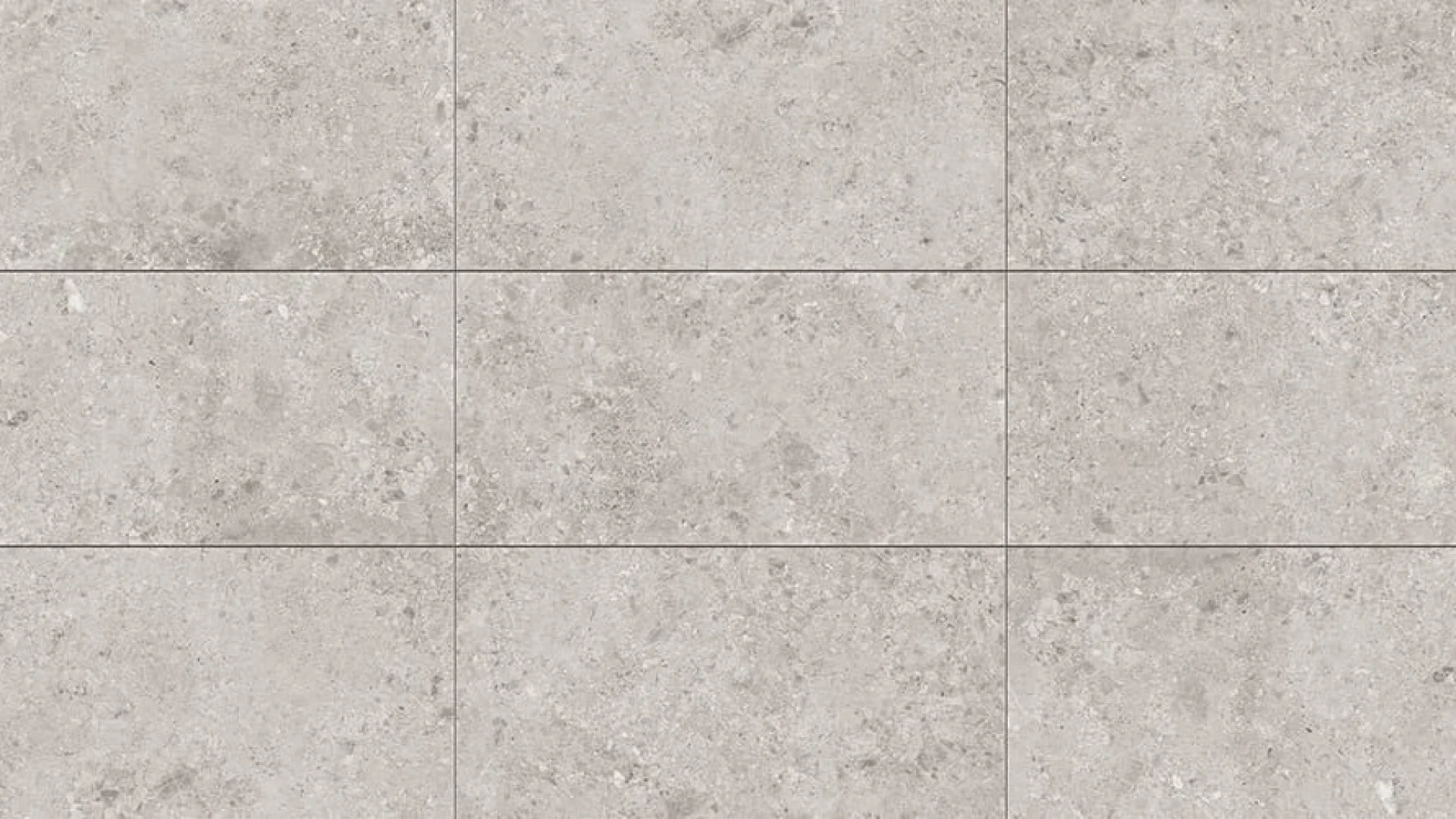
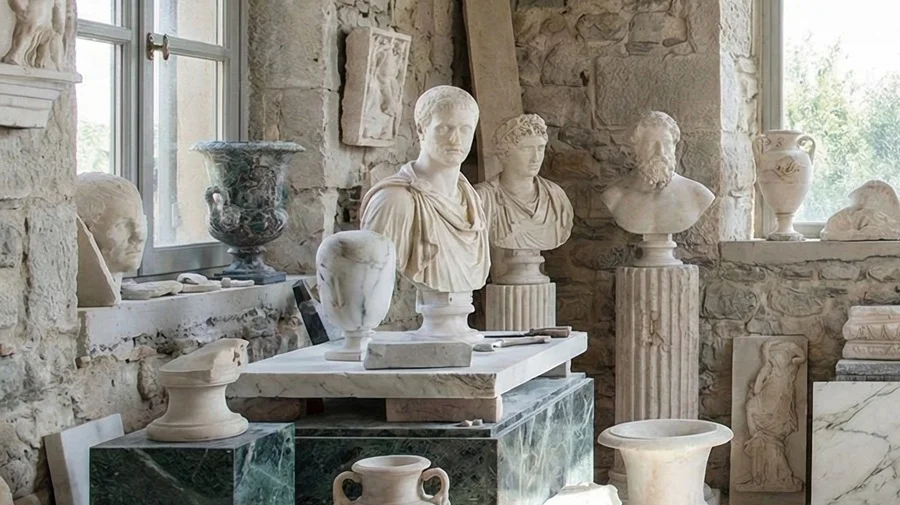
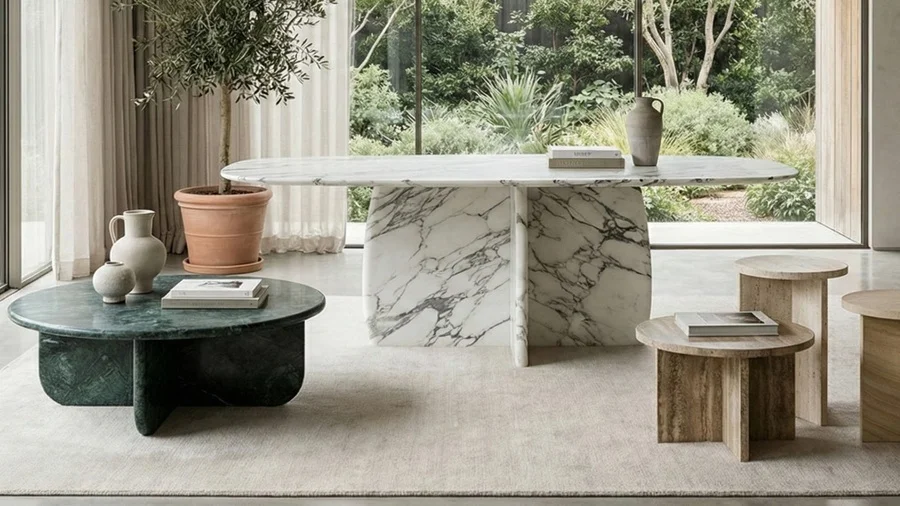

Marble is often chosen for colour and veining, yet surface treatment is just as architecturally consequential. The same marble can read as an entirely different material after processing. Choosing the right finish shapes both appearance and on-site performance.
Browse the marble collection for slab-led ranges from Turkey, read What Is Marble: Properties and Uses for formation context, and How Marble Slabs Are Selected for tone and veining in specification.
Polished
Polished marble returns a high sheen and reflects light strongly. Colour saturation and vein contrast read at their clearest. It is widely used indoors on feature walls, bathrooms, and decorative planes where a refined, luminous surface is intended.
Honed
Honed marble is matt and reads more natural. It diffuses light rather than bouncing highlights, which supports a calmer atmosphere. On floors it can offer more predictable traction than a high polish and often wears visually in a more even way over time.
Brushed or leathered treatments
Brushed or aged-style textures emphasise tactile grain and geological structure. They suit natural or rustic-led interiors where a rawer stone character is wanted; reflections are limited compared with polish.
Sandblasted
Sandblasted finishes add controlled roughness and are frequently chosen for exterior steps, façades and paths where slip resistance matters alongside weathering.
Performance and context
Finish choice is never only about aesthetics. Interior schemes prioritise visual legibility and lighting interplay; exteriors and circulation routes prioritise durability and safety. Link material selection to use class from the outset. For demanding exteriors, teams often expand the palette beyond marble alone, see the granite collection alongside marble.
Lighting and perception
Polished surfaces bounce light and can make a space feel brighter and larger; honed and matt finishes settle glare and support even illumination. Surface and lighting design should be reviewed together.
Conclusion
Surface finish is one of the variables that defines marble’s architectural personality. With coherent choices, marble acts as a design instrument rather than a generic cladding layer. Finish selection should be considered together with slab and bundle decisions in natural stone sourcing for a project.
For Turkish marble that is routinely produced in polished, honed or brushed finishes to match project briefs, see Nordic Grey Marble; for dramatic vertical planes where veining and restrained sheen are central, consider Rosso Levanto Marble.


