


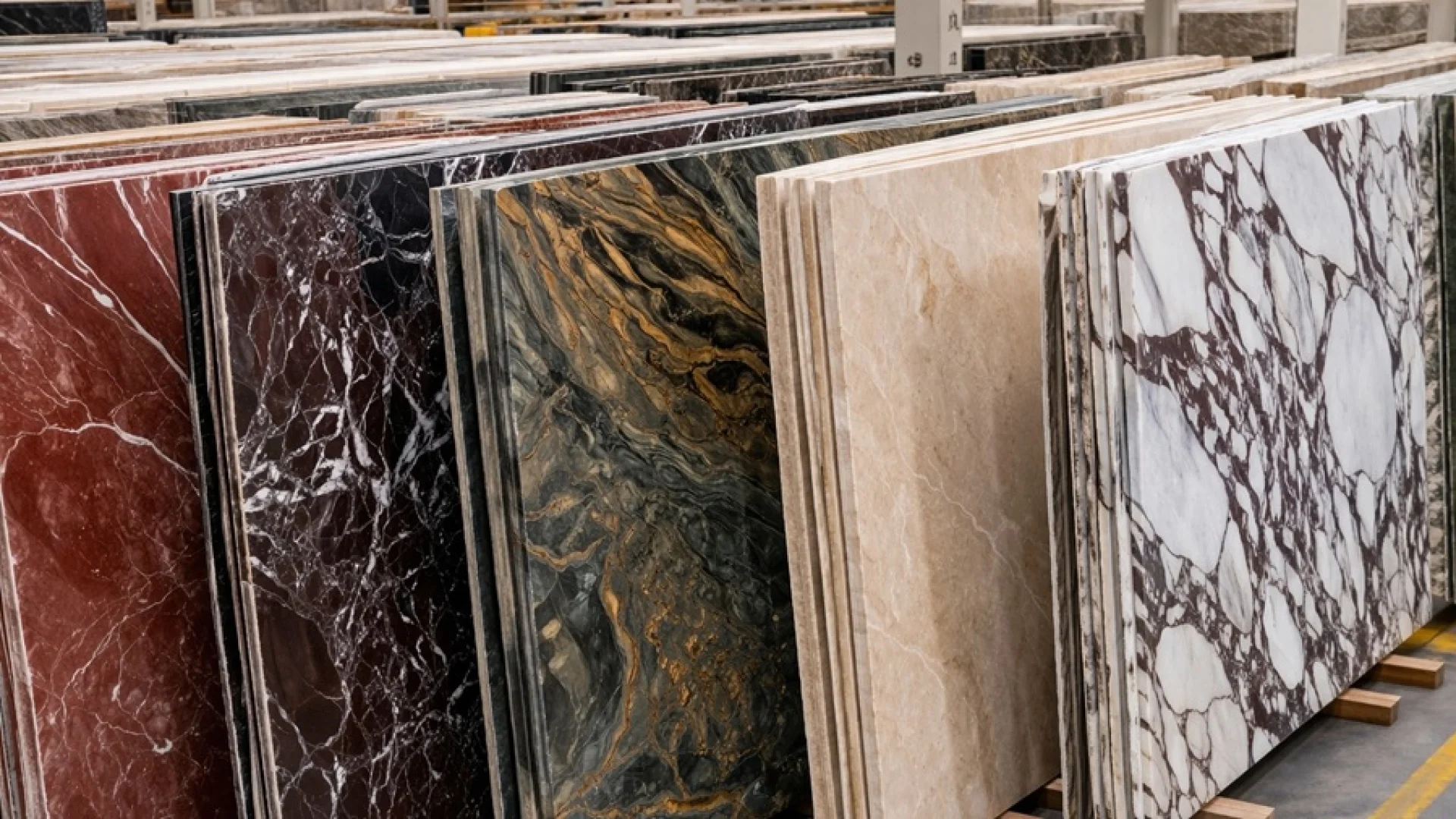
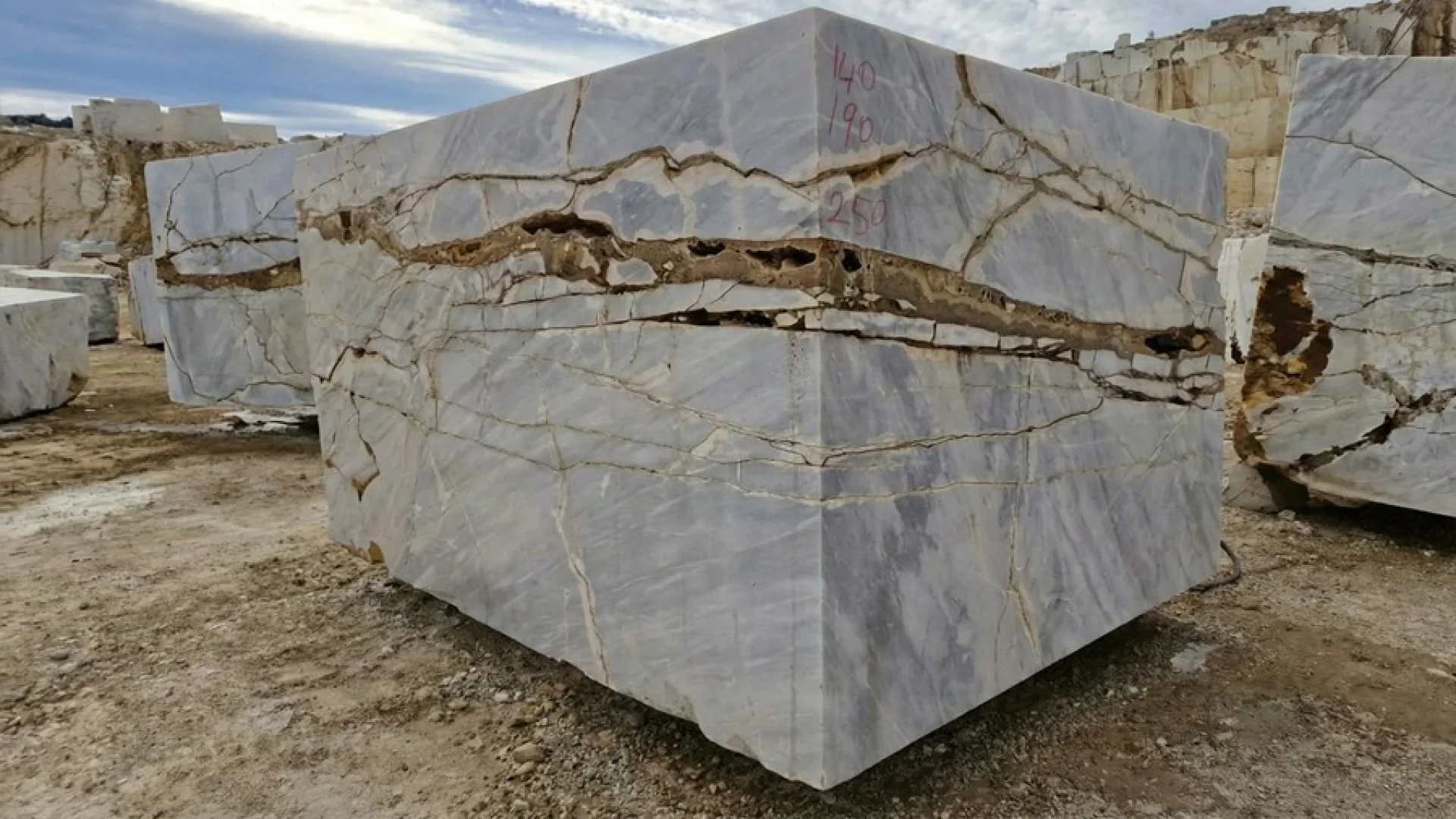

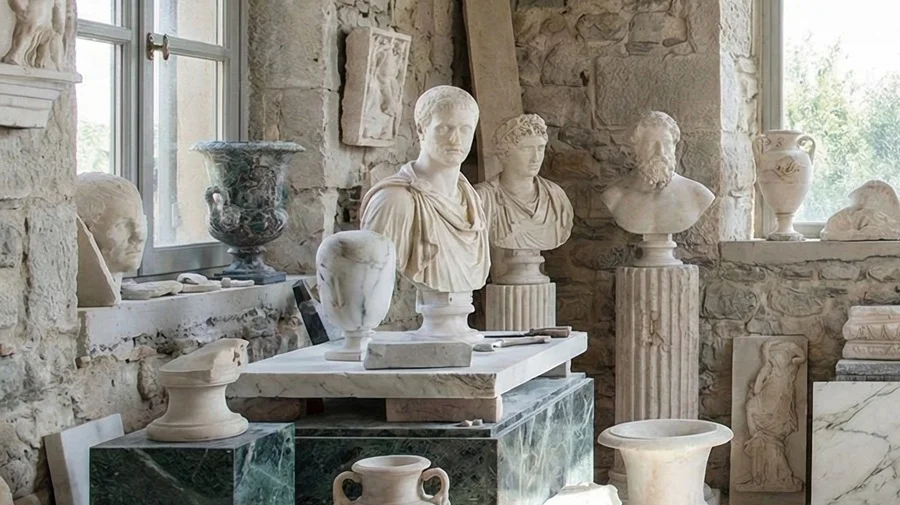
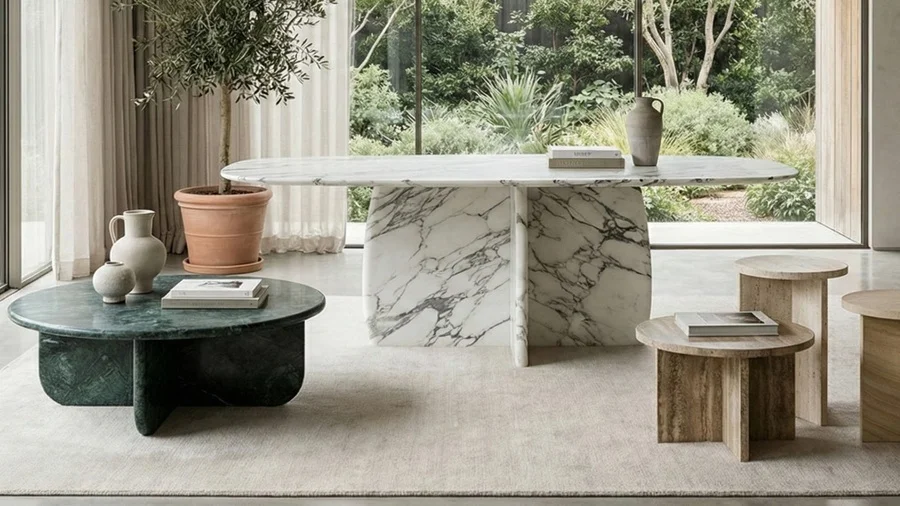

Rosso Levanto Marble is defined by a deep red ground intersected by irregular white veining, producing a surface that feels architectural rather than purely decorative. The fragmented network of veins keeps the stone’s geological history visible, giving each installation a distinct sense of depth and visual weight.
Browse the marble collection for red-toned slabs from Turkey and read What Is Marble: Properties and Uses for specification context.
Unlike lighter or more uniform marbles, Rosso Levanto absorbs light instead of reflecting it. This behavior influences spatial perception, introducing a controlled sense of enclosure and visual weight. For this reason, the stone is most effective when specified selectively, in positions where its presence defines the room’s hierarchy rather than simply covering area.
Within interior architecture, Rosso Levanto is typically specified for vertical architectural planes - monolithic wall cladding, fireplace surrounds, and articulated structural elements. When it extends across large, uninterrupted surfaces, the veining reads as a continuous mineral composition rather than a repeated motif, reinforcing spatial coherence and scale.
Context is critical to how Rosso Levanto is experienced. Neutral adjacencies, matte or low-sheen finishes, and carefully moderated lighting allow the stone’s color and structure to remain legible without overpowering the environment. In such configurations, Rosso Levanto operates as a spatial anchor rather than a graphic accent.
Beyond passing trends, Rosso Levanto maintains relevance through its clear material identity. Its value lies in the way it shapes atmosphere via contrast, depth, and restraint, making it a deliberate choice for architects and designers who work with space as much as surface.


