



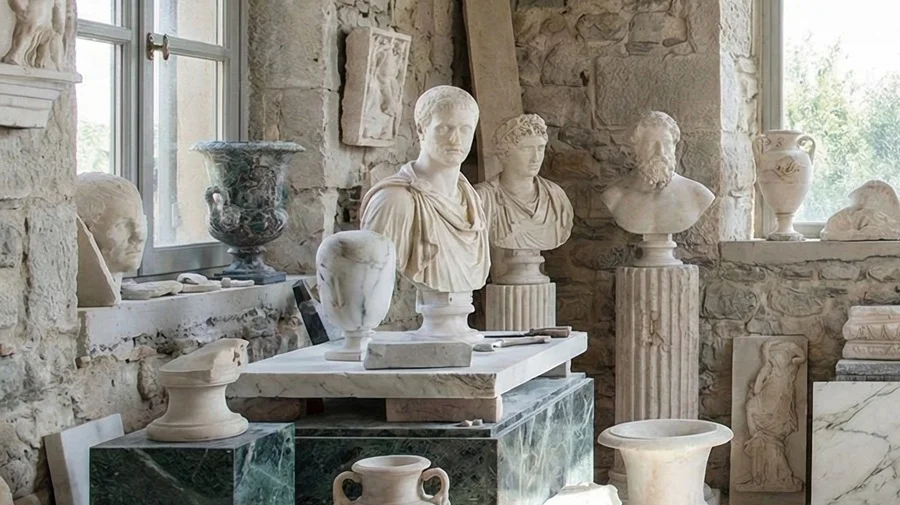
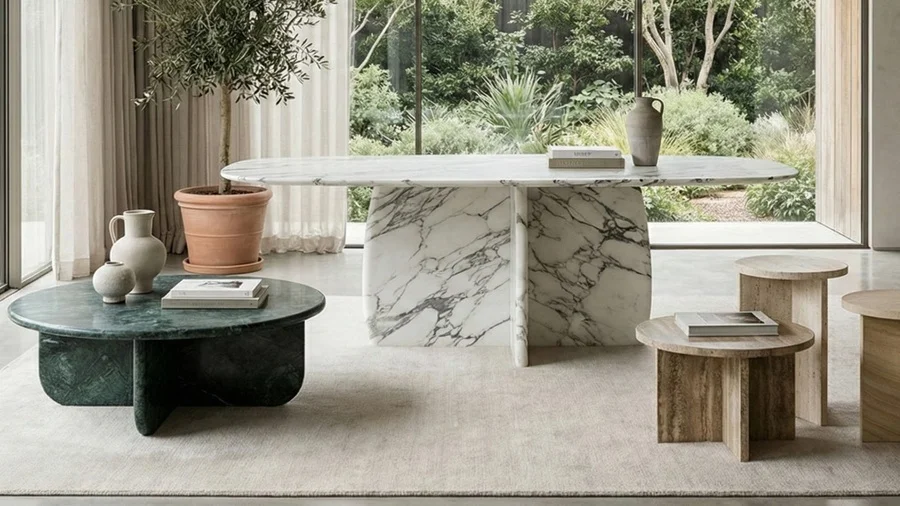

Marble is often introduced through color and veining, yet these features alone do not fully explain how the stone is perceived in architectural space. The same marble can appear calm or dramatic, light or heavy, depending on how it is cut, finished, and illuminated.
For slab-led marble ranges from Turkey, browse the marble collection and read What Is Marble: Properties and Uses.
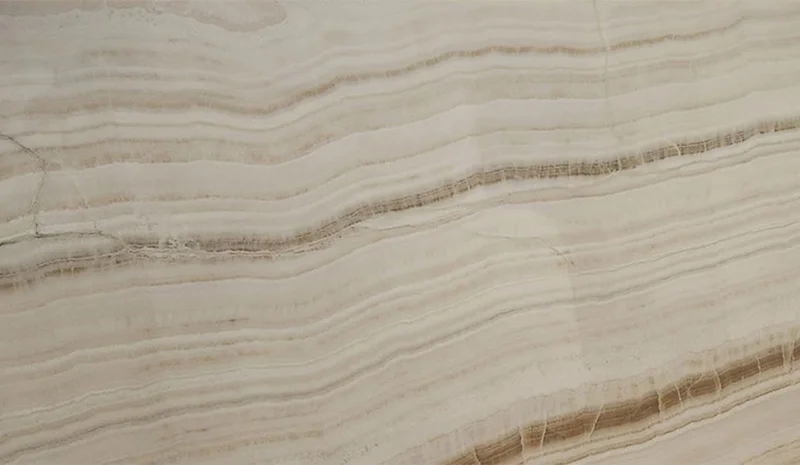
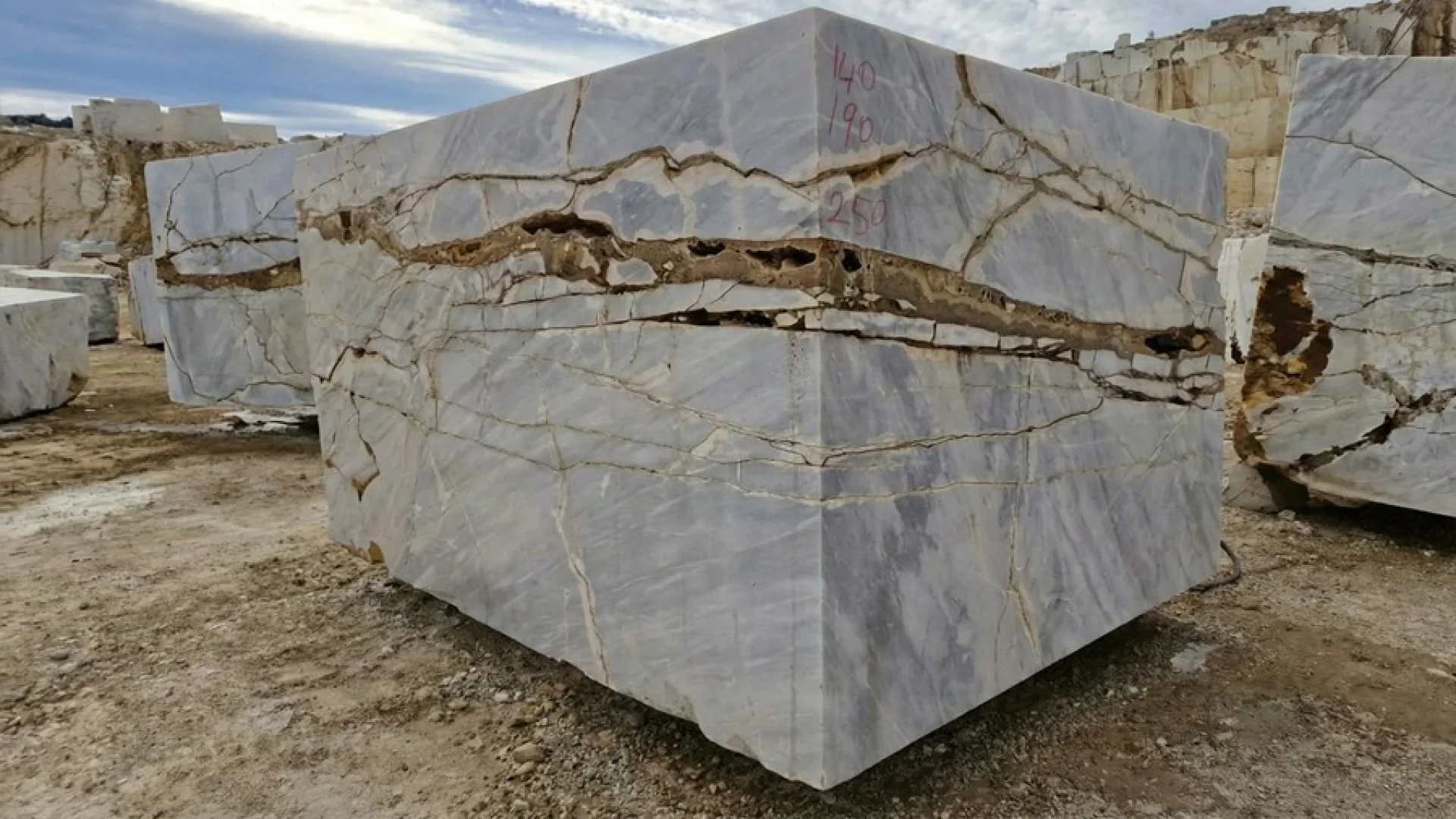
One of the most influential variables is cut direction. Vein-cut and cross-cut slabs can reveal entirely different surface expressions from the same block. While vein-cut marble emphasizes linear flow and direction, cross-cut surfaces appear layered, clouded, or textured. This difference directly affects how a surface guides the eye, anchors scale, and defines space.
Surface finish further alters perception. Polished marble reflects light and sharpens contrast, often increasing visual intensity and legibility of veining. Honed or matte finishes absorb light, softening movement and reducing glare. The stone itself remains the same, but its visual character changes significantly.
Light is the final and often underestimated factor. Natural daylight, indirect lighting, or directional spotlights each interact differently with marble’s mineral structure. Dark stones absorb light and create depth, while lighter stones reflect it, expanding spatial perception. Even subtle shifts in lighting temperature and angle can change how color and veining are read.
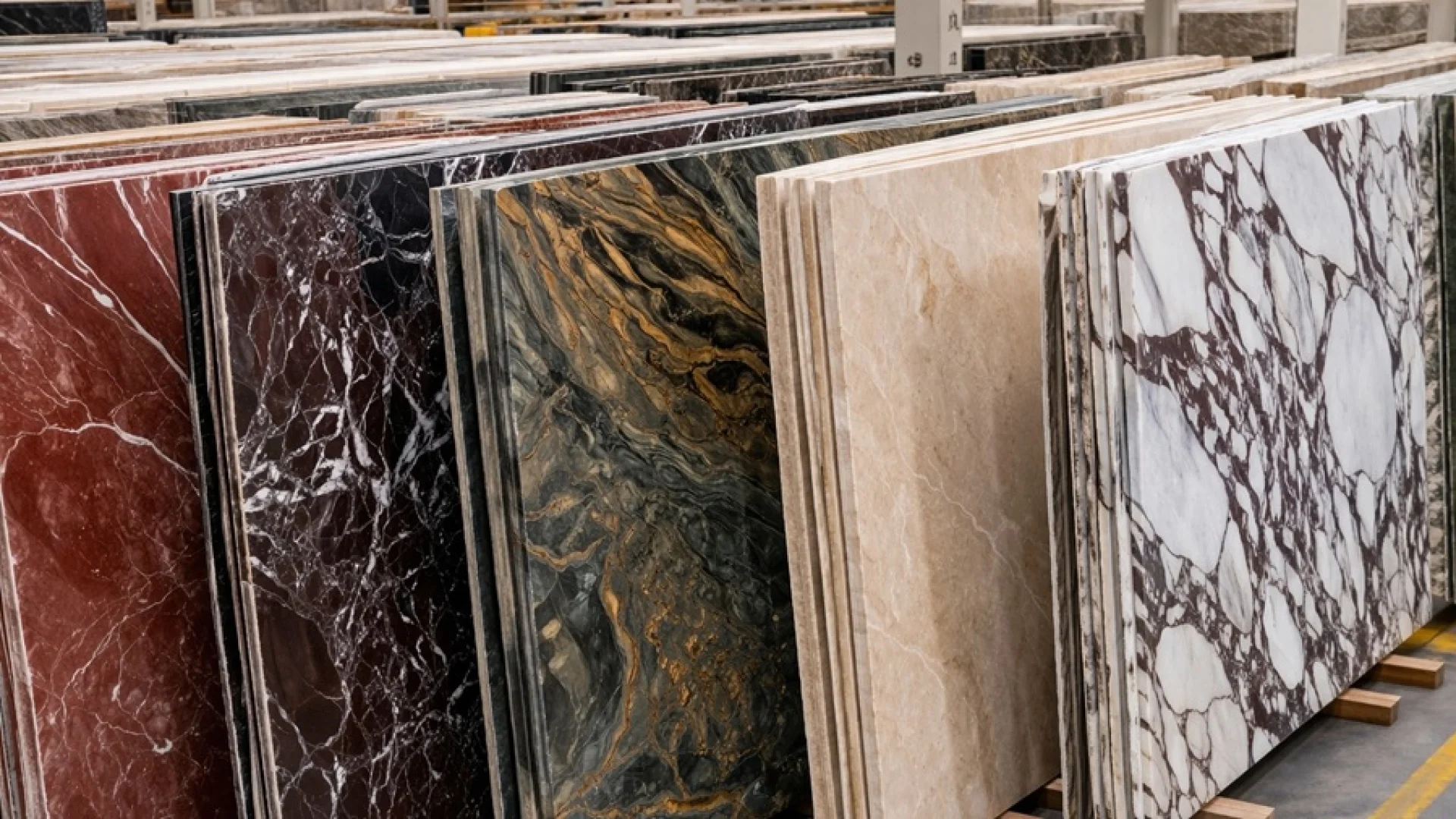
For this reason, marble should never be selected on the basis of small samples alone. Its true character emerges only when material, scale, surface, and light are considered together. Marble is not a static material; it is responsive to light, surface, and spatial context.
Understanding these variables allows marble to be used not simply as decoration, but as an architectural instrument - one that shapes atmosphere, proportion, and experience over time.


