






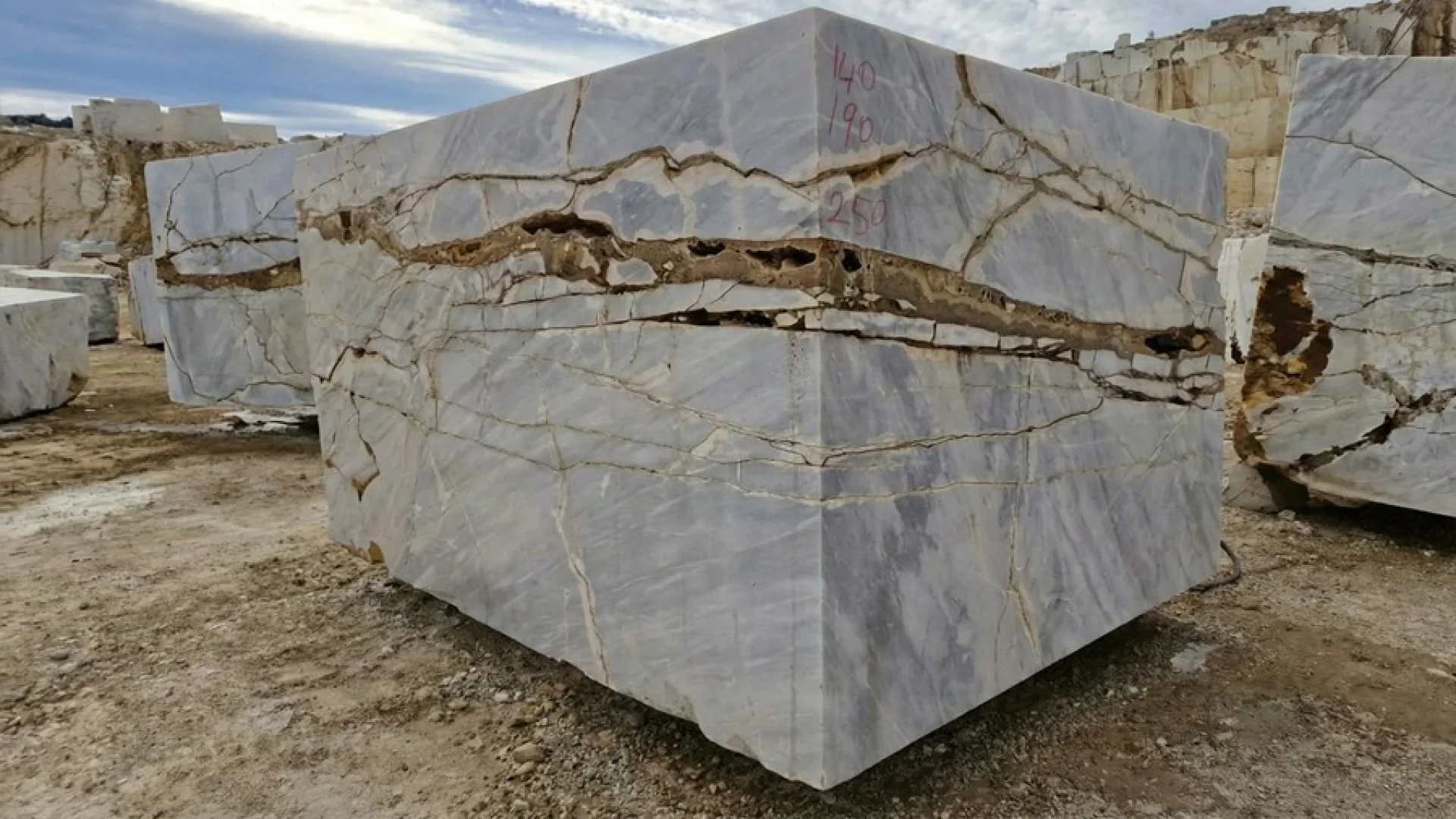

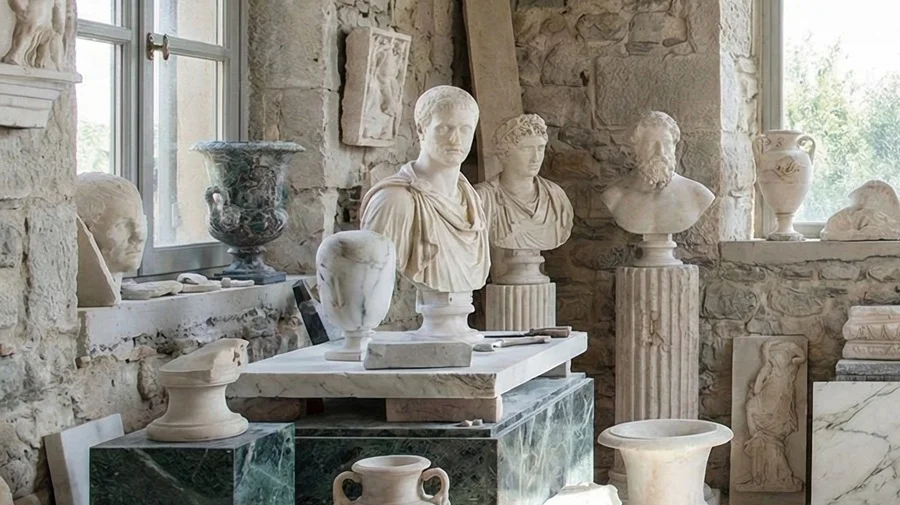


Selecting marble slabs goes far beyond choosing a color or pattern. Architects, designers, and natural stone professionals evaluate a range of visual, tonal, and material characteristics before deciding which slabs will be used in a project. When marble is applied across large surfaces, even minor variations become highly visible, making slab selection one of the most important stages in natural stone design.
Browse the marble collection for slab-led ranges from Turkey and read What Is Marble: Properties and Uses for formation and specification context.
One of the first aspects professionals examine is the veining structure of the marble. Veins define the visual movement of the surface and influence whether the stone appears calm, balanced, or dramatic. Some marbles feature fine and subtle veining, while others display bold patterns that become the main visual element of a space.
Vein direction can also influence how space is visually perceived. Horizontal veins may visually widen a surface, while vertical patterns can emphasize height and architectural rhythm. For this reason, designers select slabs not only for their pattern, but also for how that pattern will interact with the geometry of the space.
Base tone is another key factor in marble selection. Even stones extracted from the same quarry may show subtle differences in background color. When multiple slabs are used together, professionals carefully assess tonal consistency to ensure that the surfaces work harmoniously within the overall design concept.
Lighting conditions further influence how marble is perceived. Natural light can enhance depth and highlight veining, while artificial lighting may soften contrast or emphasize certain textures. For this reason, slab selection often takes into account how the stone will read under the lighting conditions of the final space.
Scale also plays a crucial role. A small sample rarely reflects the full visual impact of a marble slab. Full slabs reveal vein direction, pattern continuity, and tonal variation much more clearly. This is why many architects prefer selecting marble directly from full slabs rather than relying solely on small samples.
Ultimately, selecting marble slabs is not only a technical process, but also a design decision. The combination of tone, veining, lighting, and scale determines how the stone will shape the atmosphere of a space. Understanding these factors allows architects and designers to use marble not only as a finish material, but as a defining architectural element. The same perspective applies to sourcing natural stone from Turkey, where slab, bundle and shipment decisions are evaluated together.


