





Introduction
Natural stone has long been valued in architecture for its durability, timeless appearance, and distinctive natural character. Among the most frequently compared natural stones are marble and granite. Both materials are widely used in architecture and interior design, yet they differ significantly in geological formation, visual structure, and architectural applications. Understanding these differences helps architects, designers, and project developers select the most appropriate stone for each environment.
For specification teams sourcing from Turkey, explore the marble collection, the granite collection, and the guide What Is Marble: Properties and Uses.
Geological Formation
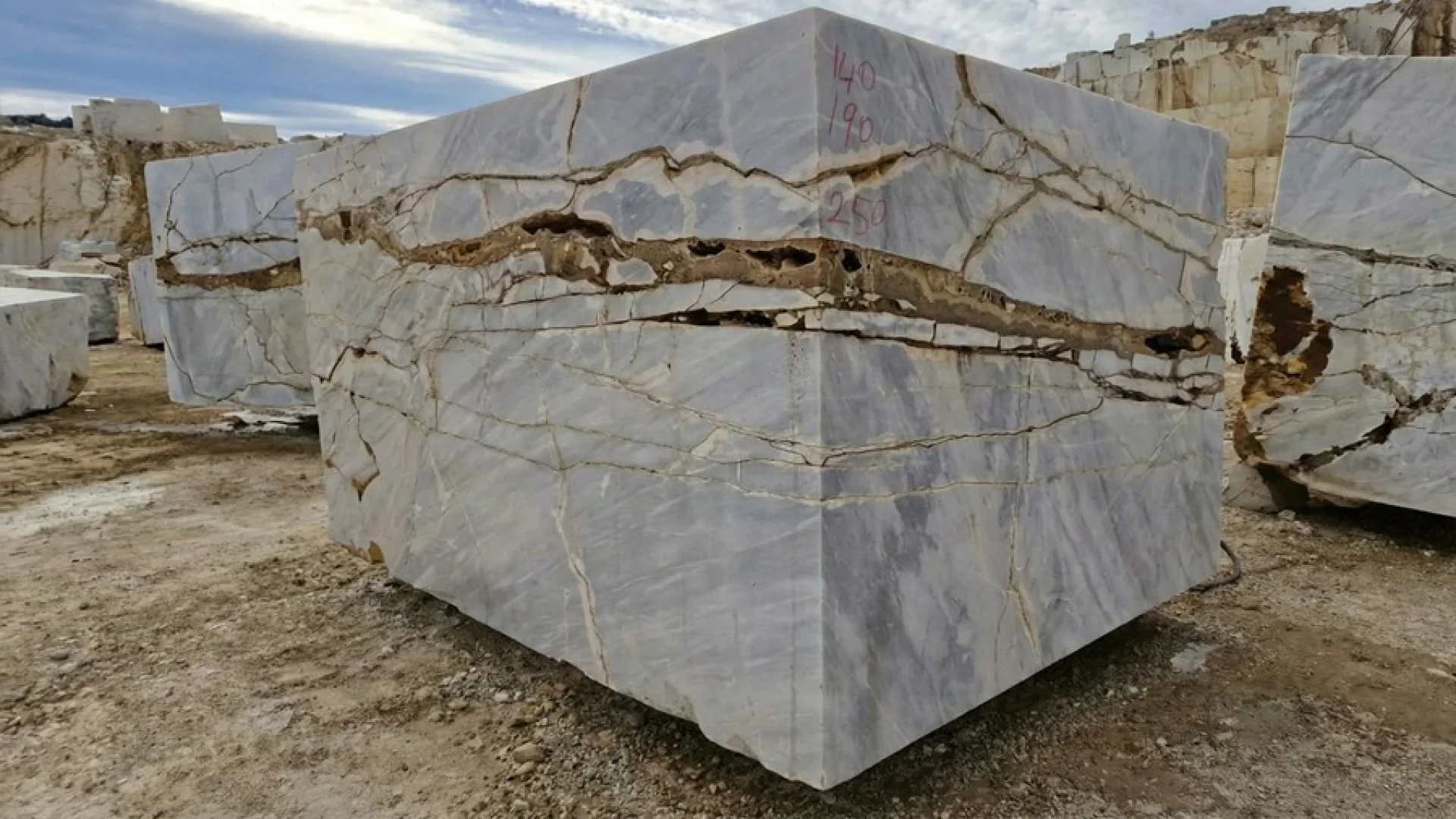
Marble and granite originate from entirely different geological processes. Marble is a metamorphic stone formed when limestone is exposed to high temperature and pressure beneath the earth’s surface. This transformation causes calcite crystals to recrystallize, creating the characteristic veining patterns associated with marble surfaces. Granite, by contrast, is an igneous rock formed when magma cools slowly beneath the earth’s crust. Its mineral composition, typically including quartz, feldspar, and mica, gives granite its dense crystalline structure and granular appearance.
Visual Characteristics
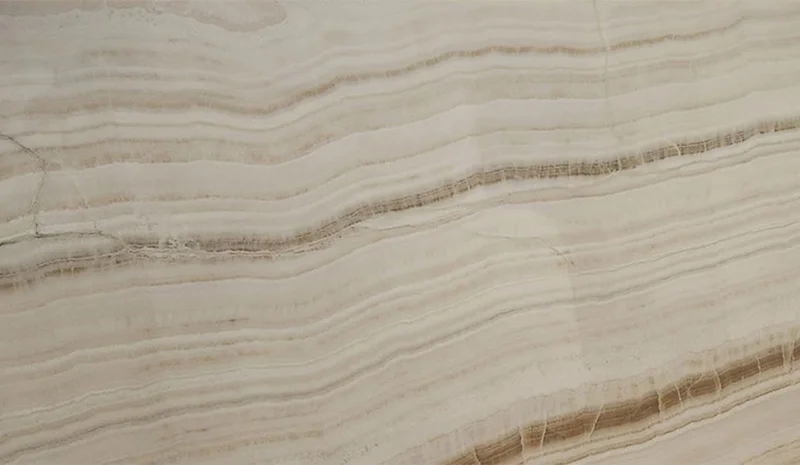
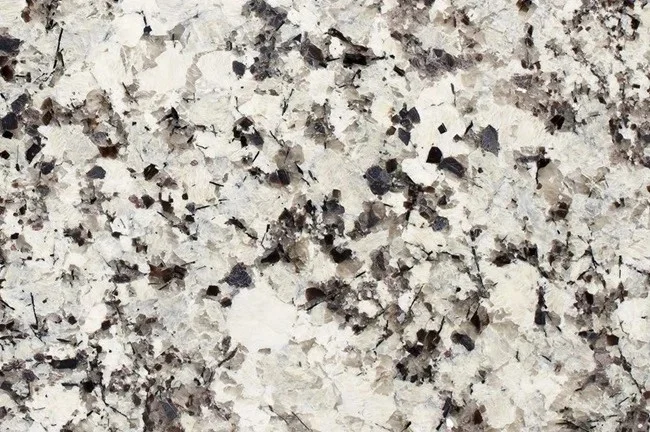
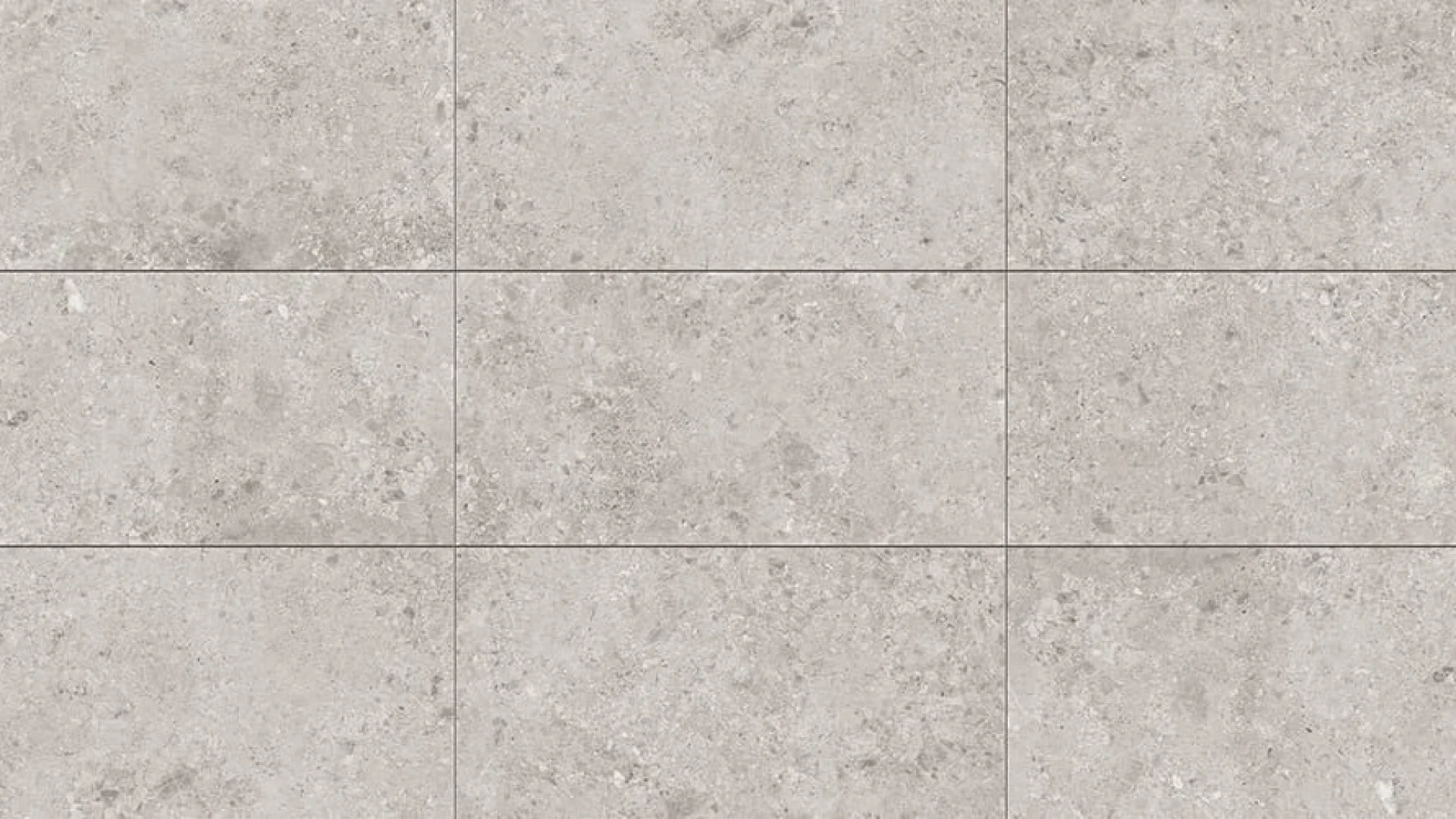
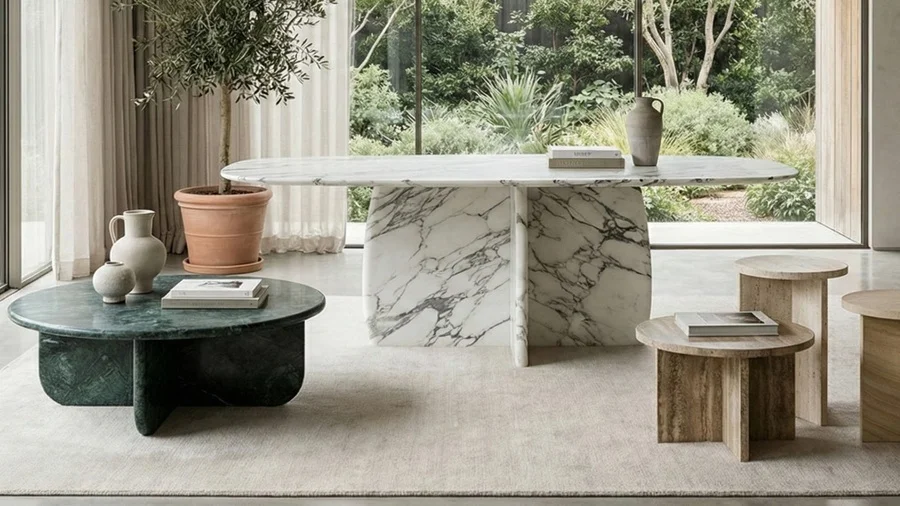
The visual difference between marble and granite is immediately recognizable. Marble is defined by flowing veining that may appear subtle, linear, or dramatically expressive depending on the stone type. These natural veins create surfaces with a strong architectural identity. Granite, on the other hand, usually presents a more uniform texture created by small mineral crystals distributed throughout the stone, resulting in a speckled or granular pattern rather than directional veining.
Durability and Structural Performance
Granite is generally harder and more resistant to scratching than marble due to its quartz-rich mineral composition. This makes granite particularly suitable for high-traffic environments. Marble, while still durable, has a softer calcite-based structure and can be more sensitive to acidic substances such as citrus or certain chemical cleaners. In architectural practice, however, durability should always be evaluated in relation to the intended application rather than hardness alone.
Typical Architectural Applications
Both marble and granite are widely used in architectural projects, although their typical applications often differ. Marble is commonly selected for interior spaces such as feature walls, bathrooms, flooring, staircases, and architectural feature elements where visual expression is especially important. Granite is frequently preferred for kitchen countertops, exterior cladding, exterior paving, and high-traffic flooring where greater resistance to abrasion and weathering is required.
Surface Finishes and Maintenance
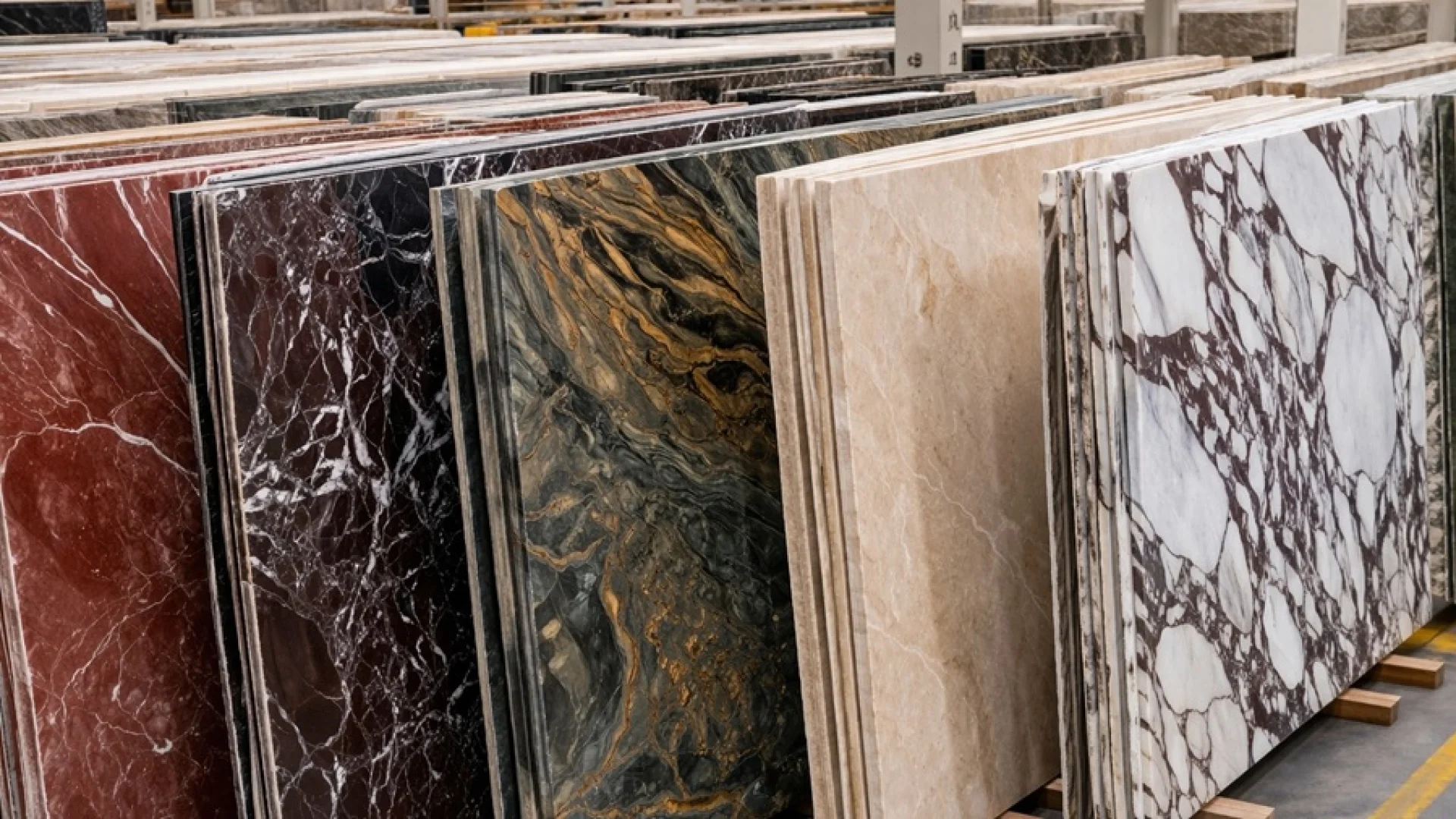
Marble and granite can be processed with a variety of surface finishes depending on design requirements. Marble is commonly produced in polished or honed finishes that enhance its natural veining and depth of color. Granite may also be polished or honed, but textured finishes such as flamed or brushed surfaces are often preferred for exterior architectural applications. Proper sealing and regular maintenance help preserve the appearance and long-term performance of both materials.
Conclusion
Marble and granite each offer distinct advantages in architectural design. Marble is valued for its expressive veining and refined visual character, while granite offers exceptional structural strength and resistance to demanding environmental conditions. Rather than competing materials, they should be considered complementary natural stones suited to different architectural contexts.


