




Sourcing natural stone from Turkey involves much more than selecting a marble or travertine that looks attractive and placing an order. For architectural projects, commercial developments, residential projects, hotels, retail environments and large-scale applications, the process requires careful evaluation of the material itself, slab characteristics, surface finish, color and veining consistency, packing requirements and shipment planning.
Natural stone is not a completely standardized industrial surface material. Even blocks extracted from the same quarry can vary in veining, color tone, mineral formations and overall visual character. For this reason, professional natural stone sourcing is not simply about finding a particular stone name. The objective is to select the right batch of material for the design and technical requirements of the project.
Turkey is an important sourcing destination for international natural stone projects because of its broad variety of marble, dolomite, travertine, limestone, onyx and other natural stones.
At Marque Natural Stones, our approach is not limited to selecting materials by product name or color. We evaluate material selection, slab characteristics, surface finish, intended application, visual continuity, current availability and export requirements as part of the same sourcing process.
This guide explains the key points architects, designers, importers, distributors, fabricators, contractors and project procurement teams should consider when sourcing natural stone from Turkey.
Why Is Turkey an Important Natural Stone Sourcing Destination?
One of Turkey's main advantages in the natural stone industry is the diversity of materials available.
Different geological formations across the country produce natural stones with a wide range of colors, veining patterns and technical characteristics.
Major product groups include:
- Marble
- Dolomite
- Travertine
- Limestone
- Onyx
- Granite and other hard stones
These product groups can be reviewed through the natural stone collection.
However, access to a wide range of materials is only one part of professional sourcing.
Turkey also has an extensive natural stone processing ecosystem covering the stages from block extraction and slab cutting to finishing, quality control, packing and export preparation.
Depending on the requirements of a project, natural stone can therefore be sourced in different formats, including:
- raw blocks,
- large-format slabs,
- standard slabs,
- tiles,
- cut-to-size products,
- natural stone with custom surface finishes.
How Do You Choose the Right Natural Stone for a Project?
The first question in natural stone selection is often: Which stone looks best?
For a professional project, however, a more important question is: Is this material suitable for the design and technical requirements of the intended application?
Color and veining are important, but they should be considered together with the application area, surface finish, slab size, thickness, physical characteristics and visual consistency within the selected batch.
Marble
Marble is one of the most widely used natural stone groups for floors, walls, bathrooms, kitchens, staircases, reception areas, fireplace surrounds and decorative applications.
Not every marble has the same visual character.
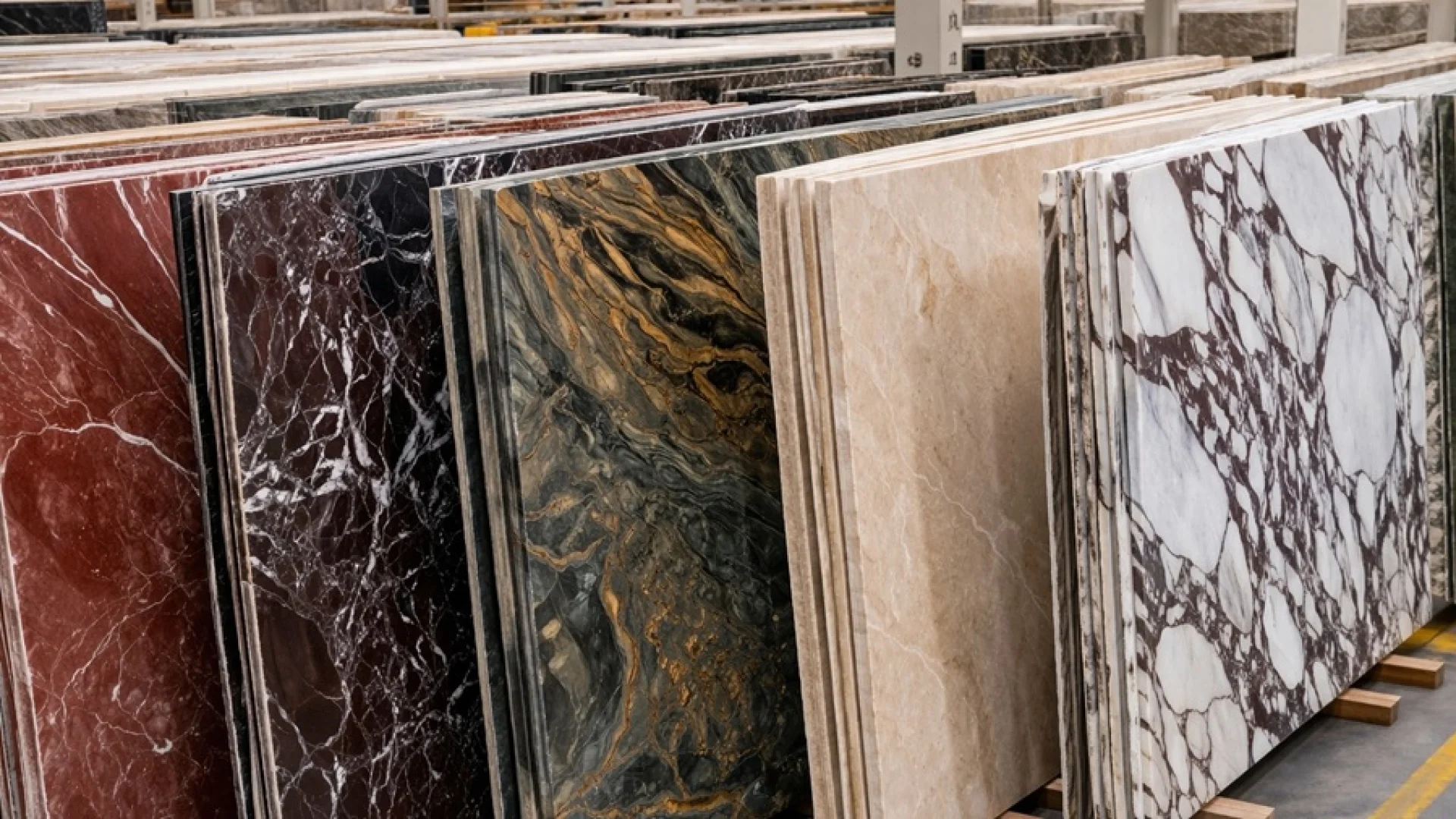
Some marbles offer a relatively uniform appearance, while others are defined by strong veining or dramatic color movement. Options with different veining and tonal character can be evaluated in the marble collection.
For this reason, marble for architectural projects should ideally be evaluated not only through small samples, but also through full slabs or groups of slabs whenever possible.
Dolomite
Dolomitic stones are often preferred in contemporary architectural projects because of their white and grey tones and distinctive veining. This group can be reviewed in the dolomite collection.
Commercial stone names and geological classifications do not always correspond directly. For this reason, project specifications should not rely solely on a commercial product name; the actual technical properties of the material should also be considered.
Travertine
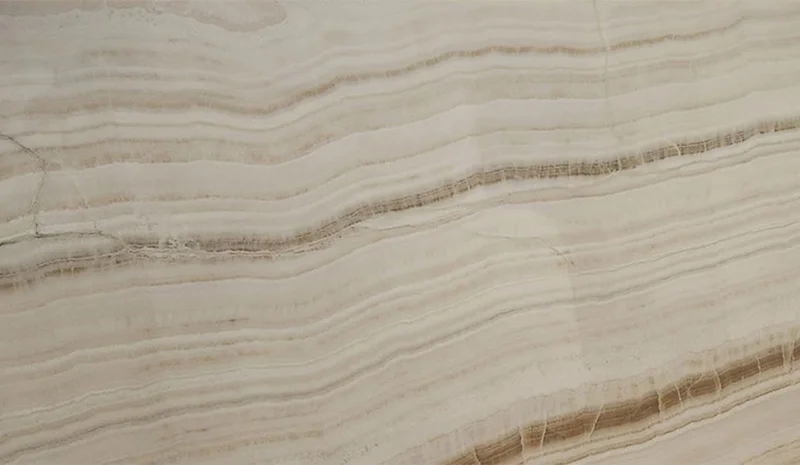
Travertine is used in both classic and contemporary projects and is recognized for its porous structure and characteristic linear movement.
The direction of cut can significantly change its appearance.
With vein-cut travertine, the linear structure becomes more pronounced, while cross-cut material can produce a softer, cloud-like and more irregular visual pattern.
For this reason, travertine selection should consider not only color but also cut direction as part of the design decision. Cut direction and surface character should be considered together when selecting from the travertine collection.
Limestone
Limestone is often selected for minimalist architectural projects because of its calm, relatively uniform appearance.
Beige, cream and light grey limestone varieties can create a restrained material palette for interior walls, flooring and large architectural surfaces.
Onyx
Onyx is primarily used in decorative and feature applications because of its translucency and strong visual character.
Typical applications include:
- backlit walls,
- bar fronts,
- reception counters,
- custom furniture,
- decorative panels.
When selecting onyx, each slab in the onyx collection should be evaluated individually for veining, color distribution and light transmission.
Granite
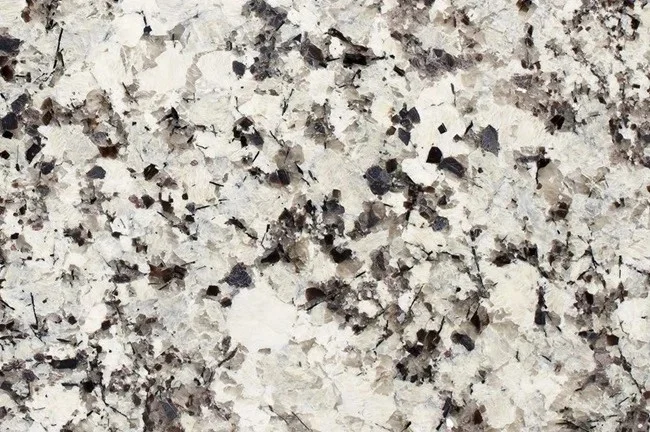
Granite is commonly considered for applications requiring durability, including floors, countertops, façades and high-traffic commercial environments.
The correct granite variety, finish and thickness should be selected according to the technical requirements of the intended application. This evaluation can be made together with the granite collection.
Slab, Block, Tile or Cut-to-Size Product?
When sourcing natural stone from Turkey, the product format should be determined according to the needs of the project.
Natural Stone Slabs
Large-format natural stone slabs provide flexibility for applications such as:
- kitchen countertops,
- wall cladding,
- large-format flooring,
- bathrooms,
- reception areas,
- tables and furniture production.
One of the main advantages of purchasing slabs is that cutting and layout decisions can be made with greater control during the project or fabrication stage.
Blocks
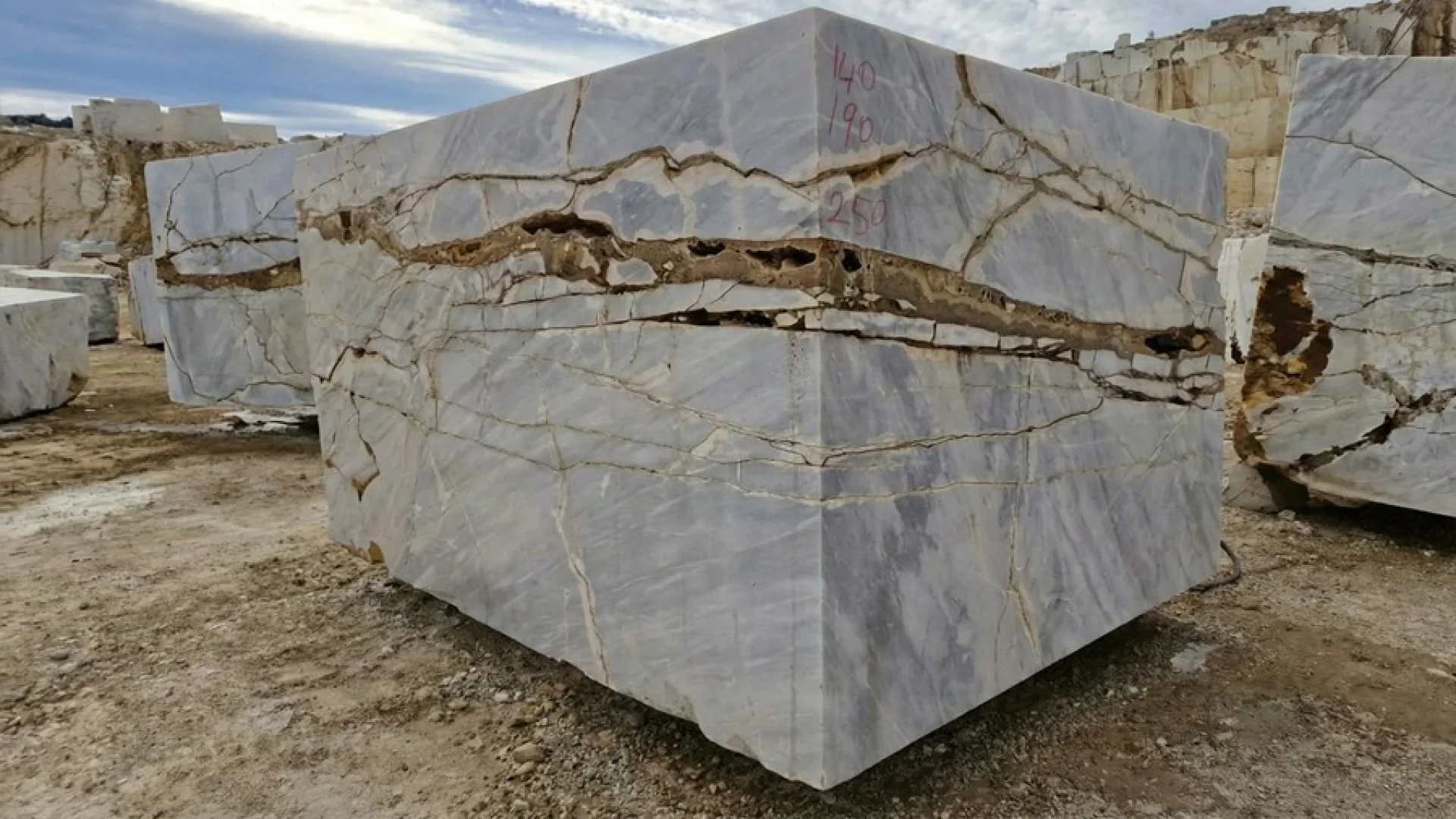
Purchasing natural stone blocks is generally more suitable for factories and large-scale processors with their own cutting and production capabilities.
Although some characteristics are visible on the exterior of a block, the complete veining and internal geological structure cannot be fully understood until the block is cut.
Block purchasing therefore requires a different level of assessment and risk management compared with purchasing finished slabs.
Tiles
Standard-size natural stone tiles can be suitable for projects where dimensional consistency and installation efficiency are important.
Cut-to-Size Products
For large architectural projects, natural stone can also be prepared according to project drawings and dimensions.
In this type of supply, the following factors become particularly important:
- dimensions,
- tolerances,
- surface finish,
- edge details,
- numbering,
- packing system.
What Should Be Checked Before Purchasing Marble Slabs?
One of the most important principles in slab selection is to evaluate the actual slabs rather than relying only on the product name. Marble slab selection criteria used by architects and buyers should be considered together with the checks below.
When reviewing a group of slabs, several criteria should be considered together.
Slab Dimensions
Length, width and thickness should be compatible with the requirements of the project.
For large-format surfaces, slab dimensions can directly influence the layout and joint planning.
Thickness
Natural stone slabs are produced in different thicknesses.
A thickness of 20 mm, or approximately 2 cm, is widely used for many applications and markets.
However, the appropriate thickness should always be determined according to the installation method, structural requirements, fabrication process and project specification.
Color and Shade Variation
Color variation is a natural characteristic of stone.
However, uncontrolled mixing of slabs with significantly different shades can create an undesirable appearance in large projects.
For this reason, bundles should be reviewed together, particularly for high-volume orders.
Veining
Vein direction and intensity strongly influence how slabs will appear when installed next to each other.
On large walls, floors and decorative surfaces, vein continuity can become an important part of the design.
Natural Fissures and Geological Features
Natural stone can contain mineral veins, fissures and other geological formations.
The key is to distinguish between natural characteristics and conditions that may affect structural performance, fabrication or installation.
Resin and Mesh Reinforcement
Some natural stones are reinforced during processing with resin or fiberglass mesh on the back.
Depending on the stone type and its natural structure, these processes can be a normal part of production.
For a professional buyer, the important point is to understand whether such treatments are present and whether they are appropriate for the intended application.
Why Does a Full Slab Show More Than a Small Sample?
A small natural stone sample can demonstrate the general color and surface appearance of a material.
However, it may not represent the full movement of a large slab.
For example, a 10 × 10 cm or 20 × 20 cm sample may appear relatively uniform, while the full slab can contain strong veins, mineral formations or large-scale color transitions.
For design-driven projects, the selection process should therefore progress, whenever possible, from sample → full slab → bundle.
Full-slab photographs and videos help architects and designers understand the actual visual character of the material before a final decision is made.
What Is a Bundle and Why Does It Matter?
In the natural stone industry, slabs from the same production group are commonly organized into units known as bundles.
Slabs within a bundle often show related color and veining characteristics because of their cutting sequence.
This is particularly important for applications such as:
- large wall cladding,
- lobbies and reception areas,
- expansive floors,
- hotel projects,
- bookmatch applications,
- vein-matched layouts.
Selecting five or ten slabs is not the same process as sourcing hundreds of square meters of natural stone.
For larger orders, buyers should avoid making decisions based on a single “representative” slab. Whenever possible, the overall character of the relevant bundle or bundles should be assessed together.
Why Are Sequential Slabs Valuable?
When a block is cut, the resulting slabs can create a sequence of related natural patterns.
When these slabs are kept in order and planned correctly, the movement of the stone can continue across a larger architectural surface.
This can transform natural stone from a simple finish material into an active part of the design composition.
Sequential slabs are especially valuable for:
- bookmatch,
- vein-match,
- large wall compositions,
- symmetrical surface layouts.
What Are Bookmatch and Vein-Match?
Bookmatch and vein-match are two approaches that make sequential slab layout part of the design decision.
In a bookmatch layout, sequential slabs are opened like the pages of a book so that they create a mirrored pattern.
The result can be highly dramatic and symmetrical, particularly with strongly veined stones.
In a vein-match layout, the goal is different: the veins are arranged so that they continue as naturally as possible from one slab to the next.
Not every natural stone is equally suitable for bookmatch or vein-match installations.
A successful result depends on several factors being considered together:
- the right block,
- appropriate cutting,
- sequential slabs,
- the correct surface finish,
- a planned layout.
How Does Surface Finish Change the Appearance of Natural Stone?
The same natural stone can look significantly different with polished, honed or textured marble surface finishes.
Polished Finish
A polished finish increases reflectivity and usually intensifies the perception of color and veining.
It can add visual depth and is frequently used where the decorative character of the stone is intended to stand out.
Honed Finish
A honed finish creates a more matte and subdued appearance.
It is frequently preferred in contemporary and minimalist interiors.
The same marble may appear more dramatic when polished and considerably softer when honed.
Brushed and Textured Finishes
Brushed, sandblasted and other textured finishes modify the tactile and visual character of the stone.
These finishes may be suitable for specific interior or exterior applications.
Surface finish should not be considered purely as an aesthetic decision. Slip resistance, traffic levels, maintenance requirements and the intended application should also be evaluated.
Natural Stone Quality Control Before Shipment
In international natural stone trade, quality control is not simply about determining whether a stone “looks good.”
The objective is to confirm that the prepared material corresponds with the requirements of the order and the project.
Depending on the type of order, a quality control process may include the following checks.
Material Verification
The prepared material should be verified against the product specified in the order.
Slab Dimensions
Slab dimensions and thickness should be checked against the agreed requirements.
Surface Inspection
Polished, honed or other surface finishes should be inspected for their general condition and consistency.
Bundle Verification
Bundle numbers, slab quantities and relevant inventory information should be matched against the order.
Visual Consistency
Slabs intended to be used together should be assessed collectively for color and veining compatibility whenever possible.
Packing Inspection
Packing prepared for international shipment should be suitable for the safe transportation of natural stone.
The purpose of quality control is not to eliminate the natural variation of stone. It is to allow the buyer to evaluate and receive the ordered material with accurate information and appropriate preparation.
How Are Natural Stone Slabs Prepared for International Shipment?
Natural stone slabs are heavy and relatively fragile products.
For this reason, packing is a critical part of international transportation.
Before shipment, slabs are secured within appropriate transport structures.
Packing and loading planning should consider factors such as:
- slab dimensions,
- total weight,
- physical characteristics of the stone,
- bundle arrangement,
- container capacity,
- loading safety.
Clear identification of bundle and product information also makes unloading, sorting and inventory control easier at the destination.
How Does the Process of Importing Natural Stone from Turkey Work?
Every project is different, but professional natural stone sourcing generally follows a series of common stages:
- Defining the project requirements
- Identifying suitable natural stone alternatives
- Reviewing samples or slab images
- Checking current availability and quantity
- Selecting slabs or bundles
- Confirming technical requirements
- Approving the quotation and order
- Completing required processing and preparation
- Quality control
- Packing
- Preparing export documentation
- Container loading and shipment
For larger projects, the process may be considerably more detailed.
When the same natural stone will be used in several different areas, slab allocation and shade management can also be planned before shipment.
What Should Architects Consider When Selecting Natural Stone?
For an architect, natural stone selection is not only a material choice. It is also a process of designing the final surface composition.
When specifying a strongly veined marble, for example, several questions should be addressed in advance:
- Will the veins run horizontally or vertically?
- Will the slabs be installed as a bookmatch?
- Is continuous veining required?
- How many slabs will make up a particular surface?
- Where will the joints be positioned?
- Are slab dimensions compatible with the geometry of the design?
- Will the quantity available within the same bundle be sufficient?
Leaving these decisions until installation can increase material waste or make it difficult to achieve the intended design.
Whenever possible, natural stone selection and application planning should therefore progress together.
What Should Importers and Distributors Consider?
For importers, the purchasing decision involves a different set of priorities.
In addition to the aesthetic qualities of the material, factors such as the following become important:
- available quantity,
- bundle continuity,
- slab dimensions,
- thickness,
- surface finish,
- packing,
- commercial documentation,
- loading plan.
When purchasing slabs for resale, it is also important to assess whether the selected batch has a commercially usable character that can serve different customers and project requirements.
The Advantage of Purchasing Natural Stone from Available Stock
When project schedules are critical, readily available stock can provide an important advantage.
For stocked materials, key information may already be known, including:
- product type,
- bundle number,
- slab dimensions,
- thickness,
- number of slabs,
- total square meters,
- surface finish.
This allows project teams to make design and purchasing decisions more quickly.
Available slabs and bundles can be reviewed through Marque Natural Stones' current natural stone stock.
How Does Marque Natural Stones Approach Natural Stone Sourcing?
Marque Natural Stones supplies natural stone for international projects through access to Turkey's natural stone resources and trusted processing partners.
Our approach is not limited to presenting a product catalogue.
Depending on the requirements of each project, the sourcing process can include:
- identifying suitable materials,
- evaluating available slabs and bundles,
- reviewing surface finishes,
- checking technical characteristics,
- planning the required quantity,
- coordinating processing and preparation,
- planning export and shipment.
Examples of this approach in different natural stone applications can be reviewed through our natural stone projects.
This project-focused natural stone sourcing approach is based on evaluating material, slab, finish and shipment decisions together rather than by product name alone.
Every natural stone project and every batch of slabs is different by nature.
For this reason, successful natural stone sourcing is not simply about finding the correct product name. The objective is to select the right material for the right project and prepare it appropriately for its intended application.
Frequently Asked Questions
Is Turkey a good source for natural stone?
Yes. Turkey is an important international sourcing destination for marble, travertine, limestone, dolomite, onyx and other natural stones. In addition to material diversity, the country has an extensive industry ecosystem covering block cutting, slab processing, surface finishing, packing and export.
What natural stones can be sourced from Turkey?
Natural stone products available from Turkey include marble, travertine, limestone, dolomite, onyx and other stone groups in block, slab, tile and cut-to-size formats.
What is the standard thickness of a marble slab?
Marble slabs are produced in different thicknesses. A thickness of 20 mm, or approximately 2 cm, is widely used in many markets and applications. The appropriate thickness should nevertheless be selected according to the technical requirements of the project.
What should be checked before purchasing marble slabs?
Important factors include slab dimensions, thickness, surface finish, shade distribution, veining, natural fissures, edge condition, slab quantity and bundle consistency.
Is a small marble sample enough for material selection?
A small sample can show the general color and surface of the stone, but it may not represent the full veining and color movement of an entire slab. Full-slab images or bundle reviews are particularly useful for strongly veined materials.
What does “bundle” mean in the natural stone industry?
A bundle is a group of natural stone slabs organized as a production, inventory and packing unit. Slabs within the same bundle may show related visual characteristics because they often come from a similar cutting sequence.
What is bookmatch marble?
Bookmatch is a layout technique in which sequential slabs are opened like the pages of a book to create a mirrored composition. It is particularly effective with stones that have strong and expressive veining.
What is the difference between polished and honed marble?
Polished marble has a more reflective surface and generally emphasizes color and veining. Honed marble has a more matte and subdued appearance. The appropriate finish depends on the application and design objective.
Can architects select specific slabs for a project?
Depending on current stock, available quantity and the sourcing model, specific slabs or bundles can be reviewed for project use. Advance slab selection is particularly important for bookmatch and vein-continuity applications.
Where should I start when sourcing natural stone from Turkey?
The first step is to define the stone type, color, application, approximate quantity, product format, thickness, surface finish and project schedule. Suitable materials and available stock can then be evaluated according to those requirements.
For Your Natural Stone Project
If you are evaluating marble or natural stone from Turkey for an architectural project, import program or stock purchase, you can share your preferred stone type, color, finish, approximate quantity and intended application with Marque Natural Stones.
Available collections and current stock can then be assessed according to the requirements of your project to identify suitable material options. Once your requirements are clear, get in touch about your project.


